South Bend gets more snow than the rest of Indiana. Your driveway knows it. South Bend Concrete plans Michiana concrete that handles what Lake Michigan sends every winter.Call (574) 727-2611

Concrete Repair in South Bend, IN

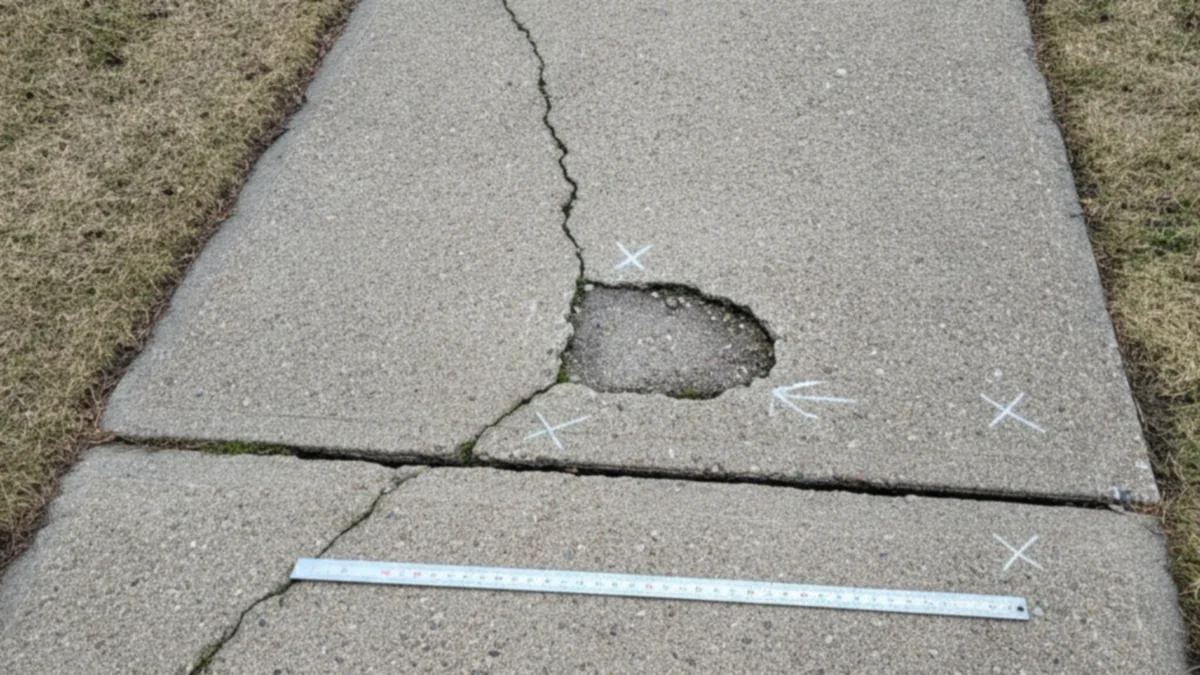
A crack is a symptom, not a complete diagnosis. Before choosing filler, patch material, leveling, resurfacing, or replacement, look at whether the slab is moving, supported, draining, and sound around the damaged area. Call Mike at (574) 727-2611 with photos that show the whole panel and close views of the defect. Mention height differences, seasonal change, loose pieces, water, previous repairs, and how the area is used.

Call directly
(574) 727-2611

Call (574) 727-2611 or use the homepage contact form. Include the address, photos if available, drainage concerns, and what is cracked, settling, or holding water.

Close view of cracked concrete being assessed for repair

Read the pattern, not just the opening

A narrow crack through a level, stable panel presents a different question from a crack with one side higher than the other. Cracks running from corners, across several panels, around posts, or beside a settled edge can point to different stresses. Mark whether the opening changes across seasons or has grown. Look at adjacent joints and the direction water travels. A close photo shows texture, but a wide photo shows the pattern that helps with the first assessment.

South Bend freeze-thaw cycles can expose weak surfaces and amplify movement where water is held below or within concrete. Salt and snow tools may contribute to surface wear, while clay-heavy soil and poor drainage may affect support below. Repair choices should follow the observed condition. Simply labeling every line as winter damage is not enough to decide what work makes sense.

Cracks, spalls, joints, and settled edges are different problems

Crack repair may focus on keeping debris or water out of a stable opening, improving appearance, or preparing for another qualified surface treatment. Spalling and scaling involve surface material that has broken or released, so the depth and strength of surrounding concrete matter. Joint deterioration may involve missing material at a planned separation. Settled edges involve elevation and support, which filler cannot correct.

Tap, scrape, or probing methods should be used cautiously, but note areas that sound hollow or shed material under ordinary contact. Look for rust staining, exposed metal, crumbling patches, and broken corners. Tell Mike whether vehicles cross the defect, feet catch on it, or water freezes there. The repair has to fit both the physical condition and the consequence of leaving it as-is.

When an isolated repair may be reasonable

A limited repair may make sense when damage is local, surrounding concrete is sound, movement appears stable, and the repaired area can be prepared with usable edges. Examples may include a chipped corner, a small spall, a stable non-displaced crack, or joint-edge damage. Color and texture matching should be discussed honestly. New repair material rarely disappears completely into older weathered concrete.

The goal also matters. A functional repair that reduces a sharp edge may look different from a decorative repair intended to support resurfacing. A driveway repair has vehicle loads that a patio patch may not. The materials and preparation should suit exposure, thickness, and movement. Thin material placed over dust or weak concrete is not a substitute for removing unsound edges and qualifying the repair area.

When movement changes the answer

Vertical displacement, rocking panels, repeated crack opening, sunken corners, water pockets, and gaps under slab edges suggest that support or movement needs attention. Leveling may fit a settled but otherwise supportable slab after the cause and void condition are reviewed. Replacement may make more sense where panels are fractured, deeply deteriorated, poorly sloped, or no longer supported across a broad area.

Tree roots, drainage, downspouts, washout, utility trenches, and transitions to garages or streets can all affect movement. Correcting the visible crack without discussing the cause can result in another repair at the same line. An honest assessment may still recommend a modest repair, but it should explain why the slab appears stable enough for that choice.

Surface damage and resurfacing limits

Broad scaling or cosmetic wear sometimes leads homeowners to ask about resurfacing. An overlay needs a qualified substrate. Active cracks, unstable patches, deep deterioration, contamination, and moving panels can show through or undermine a new surface. Small repairs may be part of preparation, but they do not turn every old slab into a resurfacing candidate.

If deterioration is concentrated at the top and the slab is stable, resurfacing assessment may be worthwhile. If only a few defects need attention, spot repair may be more proportionate. If the slab has movement and widespread failure, replacement may provide a clearer reset. Use the repair call to sort these branches instead of deciding from one close-up photo.

What a useful repair quote includes

Cost depends on access, defect type, preparation, material depth, number of separate areas, movement, matching expectations, and whether another service is needed. Small work can still require setup and cure protection. A useful quote follows the actual condition, repair depth, and surrounding slab rather than applying one shortcut to every crack.

Call Mike with the address, affected surface, rough dimensions, photos, drainage notes, previous repair history, and desired timing. Explain whether the issue is cosmetic, catches feet, affects vehicle travel, or sends water the wrong way. You will get a clearer next-step conversation when the symptom and consequence are both described.
What affects the quote

  • Damage type and depth: A chipped edge, stable crack, deep spall, broken joint, or displaced panel requires different preparation and material.
  • Number and location of repairs: Separate defects, tight access, steps, garage transitions, vehicle paths, and perimeter work affect setup and labor.
  • Movement and support: Settlement, rocking panels, voids, drainage, and active cracking may shift the recommendation toward leveling or replacement.
  • Finish expectations: Functional repair, texture matching, color difference, and preparation for a possible overlay can change the proposed scope.

How the work is planned

  1. Document the full panel. Send wide and close photos, approximate dimensions, crack direction, height changes, loose areas, water behavior, and nearby joints or edges.
  2. Separate surface from support. Stable cracking, spalling, joint damage, settlement, voids, and drainage are considered as different conditions rather than one patch category.
  3. Compare proportionate options. Spot repair, crack treatment, leveling, resurfacing, drainage correction, or replacement are discussed according to substrate and movement.
  4. Set appearance and use expectations. Material, edge preparation, color variation, cure protection, foot or vehicle use, and future observation are included in the scope.

Common questions

Can every concrete crack be repaired?

A crack can often be treated in some way, but that does not mean a patch solves its cause. Stable, level cracks differ from openings with vertical displacement or continued movement. The slab support, drainage, surrounding strength, location, and intended use determine whether repair is proportionate.

Why did my previous concrete patch come loose?

Possible causes include weak or dusty edges, inadequate preparation, trapped moisture, movement, incompatible material, insufficient repair depth, salt exposure, or placing a thin patch over unsound concrete. The failed material and surrounding slab should be assessed before repeating the same approach.

Should spalling concrete be resurfaced or replaced?

It depends on depth and substrate stability. Surface-level deterioration on a stable slab may qualify for repair or resurfacing after preparation. Deep, widespread deterioration, active movement, unstable patches, or poor support can make replacement a clearer choice.

Can leveling fix a cracked slab?

Leveling can change elevation and restore support where a slab is settled but otherwise suitable. It does not erase cracks or make fractured panels whole. Crack pattern, panel condition, voids, drainage, and desired use should be considered together before lifting is recommended.

What should I send for a South Bend concrete repair assessment?

Send the address, surface type, rough size, wide and close photos, height differences, loose material, drainage, previous patches, seasonal changes, and whether people or vehicles cross the defect. Call Mike at (574) 727-2611 or use the homepage form.

Call (574) 727-2611
Concrete Repair South Bend, IN | Crack, Spall and Movement Assessment