South Bend gets more snow than the rest of Indiana. Your driveway knows it. South Bend Concrete plans Michiana concrete that handles what Lake Michigan sends every winter.Call (574) 727-2611

Stamped Concrete in South Bend, IN

Stamped concrete makes the most sense when you want the shape and continuity of a poured patio or walk with more visual texture than a plain broom finish. The decisions go beyond picking a pattern from a sample. Drainage, base support, control joints, step transitions, furniture use, traction, color variation, and future sealer care all affect whether the finished area suits the home. Call Mike at (574) 727-2611 with photos, rough dimensions, and how you plan to use the space.

Call directly
(574) 727-2611

Call (574) 727-2611 or use the homepage contact form. Include the address, photos if available, drainage concerns, and what is cracked, settling, or holding water.

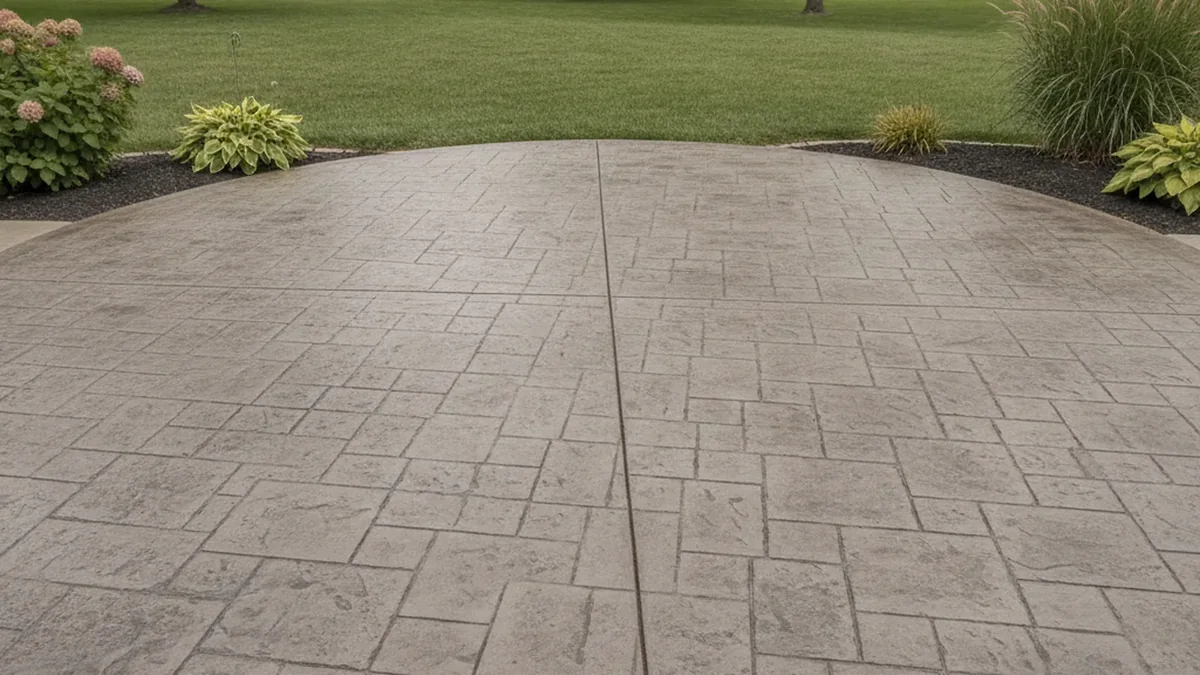
Decorative stamped concrete patio with a textured pattern

Choose the area before choosing the pattern

Start with how the patio, walkway, or entry needs to work. A grilling area needs room around heat and traffic. A dining area needs a layout that does not put chair legs on a steep pitch or directly over awkward joints. A path should meet doors, steps, gates, and existing pavement without creating small leftover corners. Decorative texture cannot rescue a layout that pinches movement or sends water toward the house.

The house, yard, and viewing distance also matter. A large field pattern can feel out of scale on a narrow side walk, while a very busy pattern may compete with brick, siding, or stone already on the home. Borders can define an area but add forming, color, and stamping decisions. Bring a few reference photos if you have them, but expect the site dimensions and drainage plan to narrow the options.

Pattern, color, and normal variation

Stamped concrete is made by working color and texture into a fresh concrete surface. It is not a printed sheet with perfectly repeated markings. Pattern alignment, hand tooling at walls, and variation across the slab are part of the work. Color can look different in sun and shade, when the surface is wet, and after sealer is applied. Samples are useful for direction, not an exact promise of how every square foot will appear.

Ask whether you prefer subtle texture or a more pronounced stone, slate, or cobblestone effect. Deep texture can hold more water and debris. Strong contrast can emphasize every variation, while a quieter color blend may sit more naturally beside the home. The best selection is not simply the most detailed stamp. It is the combination that fits the space, the expected upkeep, and the level of traction you want.

Traction is a design decision

Decorative sealer can deepen color and change how a surface feels underfoot. That matters around entries, shaded patios, steps, and routes used during wet or snowy weather. A glossy appearance may look appealing in a photo but may not match a homeowner who puts wet-weather traction first. Texture, sealer choice, and any compatible traction additive should be discussed together rather than after the surface is complete.

Think about who uses the area and when. Children running from the yard, older visitors approaching a step, dogs tracking in water, and snow carried across an entry all create different priorities. Furniture also needs reasonably stable contact. A highly textured pattern can make small table or chair feet wobble. Stamped concrete can still be a good choice, but appearance should not crowd out ordinary daily use.

South Bend drainage and winter exposure

Patios and walks in Michiana see snow cover, meltwater, refreezing, spring rain, and soil that may hold moisture. The slab needs a base and slope suited to the site. Water should move away from the house and should not be trapped by a decorative border. Roof downspouts, low lawn areas, shaded corners, and the point where a walkway meets the driveway all deserve attention before forming begins.

Control joints are still needed in decorative concrete. Their placement should work with the slab geometry and, where possible, the pattern. Hiding every joint for appearance is not a sound trade when the slab needs planned places for normal shrinkage. Winter care also includes sensible snow removal and attention to deicing products. The decorative surface should be treated according to the sealer and concrete guidance provided for the project.

Sealer wear and maintenance expectations

Many stamped surfaces use sealer to support color appearance and surface care. Sealer is a wearing layer, not a one-time finish that can be forgotten. Sun, shade, foot traffic, furniture, grills, cleaning methods, standing water, snow tools, and deicing residue can create uneven wear. A protected patio may age differently from an exposed walk even when both were finished at the same time.

Maintenance should be based on actual condition and compatible products. Applying new material over a dirty, damp, flaking, or incompatible older layer can create haze, peeling, or an uneven look. Before any future treatment, identify the current product if possible and assess the surface. Routine sweeping, careful cleaning, drainage control, and avoiding harsh methods can matter as much as the timing of the next sealer application.

Stamped concrete or a simpler finish?

Stamped concrete may fit when decorative texture is a real priority and you are comfortable with color variation and sealer care. A broom finish may be a better fit when simple traction, lower visual complexity, and straightforward maintenance matter more. Existing pavers may make more sense where individual units and a different repair approach are preferred. The right answer depends on layout, budget, access, appearance, and how the area will be used.

Stamped concrete is quoted from the actual layout, size, pattern, color plan, access, removal, base preparation, drainage, borders, and sealing approach. A patio, decorative walk, and complex multi-level layout do not share one dependable shortcut price. Call Mike with rough measurements and photos so the quote can reflect the surface and design being considered.

What affects the quote

  • Layout and decorative scope: Patio size, pattern, color, borders, texture, transitions, and sealing choices affect materials and labor.
  • Pattern and color complexity: Multiple colors, borders, detailed hand tooling, texture depth, and difficult pattern transitions affect labor and materials.
  • Site and base preparation: Removal, access, grading, drainage correction, edge support, and the condition of the ground influence the quote.
  • Shape and transitions: Curves, steps, narrow walks, door thresholds, existing slabs, and small isolated sections can add detail beyond simple square footage.

How the work is planned

  1. Map the use and dimensions. Identify doors, steps, furniture zones, grill space, gates, drainage paths, and any existing concrete that must meet the new work.
  2. Narrow pattern and color. Compare scale, texture depth, border choices, shade conditions, and how normal variation will appear beside the home.
  3. Plan base, slope, and joints. Site support, runoff, control-joint placement, edges, and transitions are addressed before decorative details are finalized.
  4. Set care and access expectations. Weather, cure needs, foot traffic, furniture return, cleaning, snow removal, and sealer maintenance are discussed for the selected system.

Common questions

How much does a stamped concrete patio cost in South Bend?

Stamped patios need a scope-based quote. Size, pattern, color, borders, access, removal, base work, drainage, transitions, and sealing all affect the work. A walkway, simple patio, and unusually complex layout should not be priced as though they are interchangeable.

Is stamped concrete slippery when wet?

Texture and sealer influence traction. Some decorative finishes can feel slicker when wet, especially with a glossy film or on a shaded surface. Discuss the intended use, finish level, and compatible traction options before choosing appearance. Steps, entries, and snow routes deserve extra attention.

Can stamped concrete be used for a South Bend walkway?

Yes, when the layout, slope, transitions, and traction plan fit. Narrow walks require pattern-scale and edge decisions that differ from a large patio. The route should drain properly and meet steps, gates, driveways, and doors without creating awkward height changes.

Does stamped concrete need to be sealed?

Many stamped systems use sealer as part of their color and surface approach. The correct product and future treatment depend on how the surface was made, its exposure, and the existing layer. Sealer wears and should be assessed by condition rather than treated as permanent.

What should I send for a stamped concrete quote?

Send the address, photos of the area, rough dimensions, preferred use, doors and steps, access limits, drainage concerns, and a few style references if you have them. Call Mike at (574) 727-2611 for the fastest start, or use the homepage form to share details.
Call (574) 727-2611
Stamped Concrete South Bend, IN | Patios, Walks and Finish Planning