South Bend gets more snow than the rest of Indiana. Your driveway knows it. South Bend Concrete plans Michiana concrete that handles what Lake Michigan sends every winter.Call (574) 727-2611

Epoxy Flooring in South Bend, IN

Epoxy flooring is a material-system decision, not a paint-color decision. The first questions are where the slab is located, whether moisture is moving through it, what is already on the surface, how the room is used, and what preparation the concrete can accept. Basements, utility rooms, workshops, and garages create different exposure and cure conditions. Call Mike at (574) 727-2611 with room photos, approximate size, floor history, moisture signs, and your expected use.

Call directly
(574) 727-2611

Call (574) 727-2611 or use the homepage contact form. Include the address, photos if available, drainage concerns, and what is cracked, settling, or holding water.

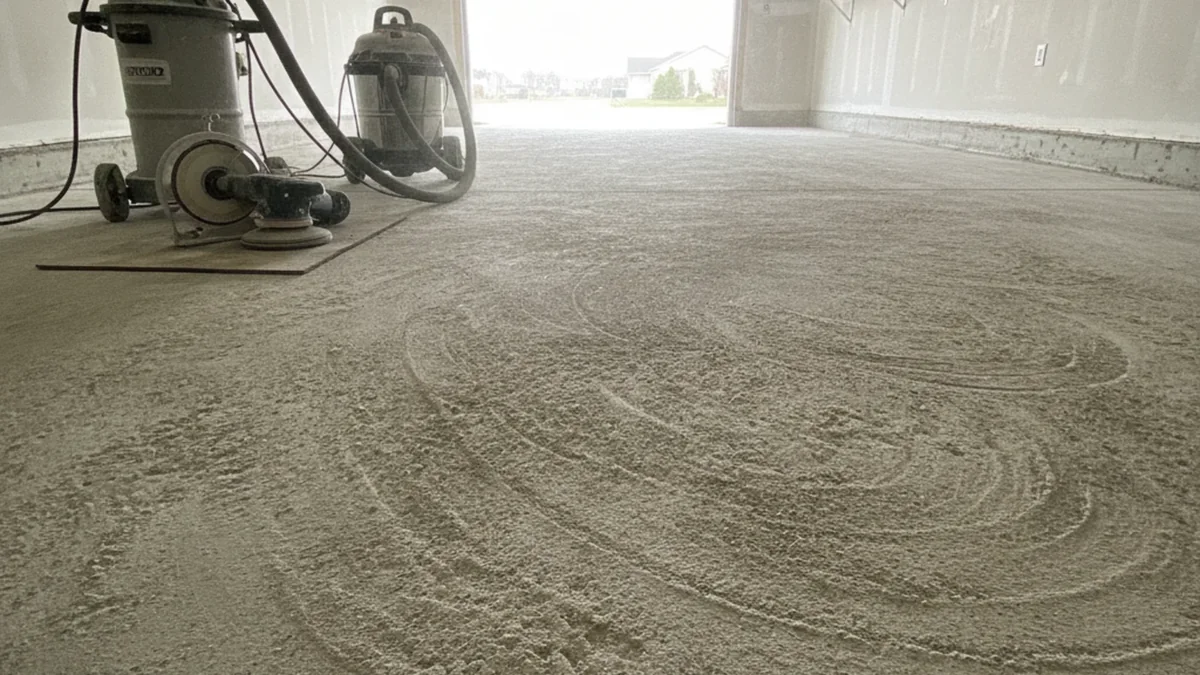
Mechanically prepared concrete floor during surface grinding

Epoxy is one family of floor systems

The word epoxy is often used for every glossy concrete coating. That can hide important differences. Epoxy products vary in solids, thickness, working time, primer requirements, moisture tolerance, appearance, and intended environment. Other resin or coating layers may be used with or instead of epoxy depending on exposure. The label on the front of a kit does not answer whether the complete system fits a basement, workshop, utility space, or vehicle area.

Begin with the goal. A basement hobby room may put easy cleaning and a calmer appearance first. A workshop may need resistance to ordinary spills and abrasion from benches or rolling equipment. A garage introduces hot tires, winter slush, grit, and vehicle chemicals. A utility room may have floor drains, appliance movement, or occasional water. The system, texture, color, and edge details should follow those conditions.

Moisture can decide whether the project fits

Concrete can look dry while still transmitting moisture vapor. Basements and slabs close to grade deserve careful attention, especially where paint has blistered, dark areas return after cleaning, white mineral deposits appear, or the room smells persistently damp. Covering active moisture with a low-permeability coating can cause adhesion problems or visible defects. A coating should not be used to disguise a water-entry problem that needs drainage, plumbing, foundation, or humidity correction.

Tell Mike about past seepage, sump activity, wall moisture, floor drains, plumbing leaks, and seasonal changes. Moisture evaluation should match the proposed system and slab. A single casual observation is not the same as understanding conditions. If the slab is not a fit for the desired system, it is better to adjust the plan than to promise that primer will solve every moisture issue.

Mechanical preparation and clean concrete

Bond depends heavily on preparation. The surface may need mechanical profiling to remove weak laitance, open the concrete, and create the texture the system requires. Sweeping and rolling material over a smooth slab is not equivalent. Existing paint, adhesive, curing compounds, sealer, oil, rust, patch material, and soft concrete can each change the preparation scope. Edges, corners, penetrations, and the area around posts or equipment need attention too.

Cracks and joints should be identified rather than buried without a plan. Some cracks may be stable enough for compatible repair before coating. Active movement can reflect through a rigid finish. Control and expansion joints serve a purpose and may need treatment that differs from ordinary cracks. The floor should be clean, sound, and prepared for the exact primer or body coat, not prepared by a generic recipe.

Primer, build coats, and finish choices

A complete flooring system may include a primer, one or more build layers, decorative media, and a finish coat. Not every room needs every layer. Primer selection can depend on substrate condition and moisture data. Thickness affects how the surface bridges minor texture and how easily application defects show. Decorative flakes can add visual breakup and influence texture, while a solid color exposes every speck and preparation line more clearly.

Finish choices should consider light, cleaning, traction, and the way the room is used. Dark floors can show dust differently from light floors. High gloss can brighten a basement but may show scratches or surface waviness more clearly. Added texture can support footing but may require more effort to mop. There is no universal best finish. The useful choice balances appearance with the room rather than copying a polished display photo.

Temperature, cure window, and room logistics

Material temperature, slab temperature, room temperature, humidity, and ventilation can affect mixing, working time, and cure. A heated room may offer more control than an unconditioned garage, but basements can still be cool or damp. The product data should set the acceptable conditions. Scheduling also has to account for moving appliances, shelving, tools, boxes, or vehicles before preparation begins.

The room should remain protected for the specified cure period. Foot traffic, equipment return, rugs, storage, and vehicle use may have different timelines. Odor and ventilation needs depend on the products. Homeowners should know which rooms or doors will be affected and how family members and pets will avoid the area. A clear logistics plan is part of a useful quote, not a detail to solve after material is mixed.

Epoxy flooring versus garage-use coating priorities

An epoxy flooring conversation starts with substrate and material-system fit across several indoor uses. A garage-floor coating conversation starts with vehicle behavior: hot tires, salt slush, grit, jacks, parking, traction, cleanup, and how long the garage can stay empty. The two can overlap, but the decision logic should not. Someone asking for a basement floor should not be pushed through the same checklist as a two-car garage.

If your main concern is a vehicle area, read the garage floor coating guidance and describe tire paths, winter runoff, drains, and downtime. If the project is a basement, workshop, or utility space, focus on moisture history, room use, equipment, and indoor conditions. Call Mike with those details so the first recommendation is based on the floor you actually have.

What affects the quote

  • Slab condition and preparation: Old paint, adhesive, oil, weak surface material, patches, cracks, edges, and mechanical profiling can change the work required.
  • Moisture evaluation and system fit: Basement history, vapor conditions, drainage issues, and compatible primer or mitigation decisions affect scope without creating a universal dollar range.
  • Layer count and materials: Primer, build thickness, decorative flake, texture, color, and finish coat choices change material quantity and labor.
  • Room logistics: Equipment moving, appliance access, tight edges, ventilation, temperature control, and cure protection are considered in the quote.

How the work is planned

  1. Define the room and use. Share whether the slab is in a basement, utility room, workshop, garage, or another space, plus expected traffic, spills, equipment, and cleaning.
  2. Review substrate and moisture. Existing coatings, repairs, contamination, cracks, joints, water history, mineral deposits, and seasonal dampness are considered before system selection.
  3. Specify preparation and layers. Mechanical profiling, repairs, primer, body layers, decorative media, texture, and finish are matched to the slab and intended use.
  4. Plan conditions and return to use. Room clearing, temperature, humidity, ventilation, cure protection, and staged return of foot traffic or equipment are set by the chosen products.

Common questions

Is every concrete floor a good candidate for epoxy?

No. The slab needs to be sound enough for preparation and compatible with the selected system. Active moisture, weak concrete, contamination, moving cracks, unknown old coatings, or unresolved water entry can make the proposed system a poor fit until the underlying condition is addressed.

Can epoxy flooring go over old floor paint?

Not simply because the paint is still present. The old layer must be identified and assessed for bond, contamination, and compatibility. In many cases it needs to be mechanically removed so the new system bonds to qualified concrete rather than relying on an uncertain older coating.

What causes epoxy floors to peel?

Common contributors include inadequate profiling, dust, oil or sealer contamination, moisture vapor, weak surface concrete, incompatible layers, poor mixing, and conditions outside product requirements. Hot tires can add stress in garages. A useful plan addresses substrate, environment, and use before application.

How long before I can use an epoxy floor?

The answer depends on the exact primer, coating layers, slab and room temperature, humidity, ventilation, and type of use. Light foot traffic, equipment placement, rugs, and vehicle traffic may have different windows. Follow the selected system data and confirmed site conditions.

What details help with an epoxy flooring quote?

Provide the address, room type, rough size, photos, current coating, crack and joint condition, water or dampness history, floor drains, equipment that must move, desired appearance, and timing. Call Mike at (574) 727-2611, or send the basics through the homepage form.
Call (574) 727-2611
Epoxy Flooring South Bend, IN | Substrate and System Planning