South Bend gets more snow than the rest of Indiana. Your driveway knows it. South Bend Concrete plans Michiana concrete that handles what Lake Michigan sends every winter.Call (574) 727-2611

Concrete Resurfacing in South Bend, IN

Resurfacing places a new adhered surface over qualified existing concrete. It can be considered for stable slabs with broad cosmetic wear, light scaling, or a finish that needs renewal. It is not a cover for active movement, major settlement, weak concrete, or deep deterioration. Call Mike at (574) 727-2611 with full-area photos, close-ups, rough dimensions, crack and patch history, drainage, old sealer or paint, and the finish you are considering.

Call directly
(574) 727-2611

Call (574) 727-2611 or use the homepage contact form. Include the address, photos if available, drainage concerns, and what is cracked, settling, or holding water.

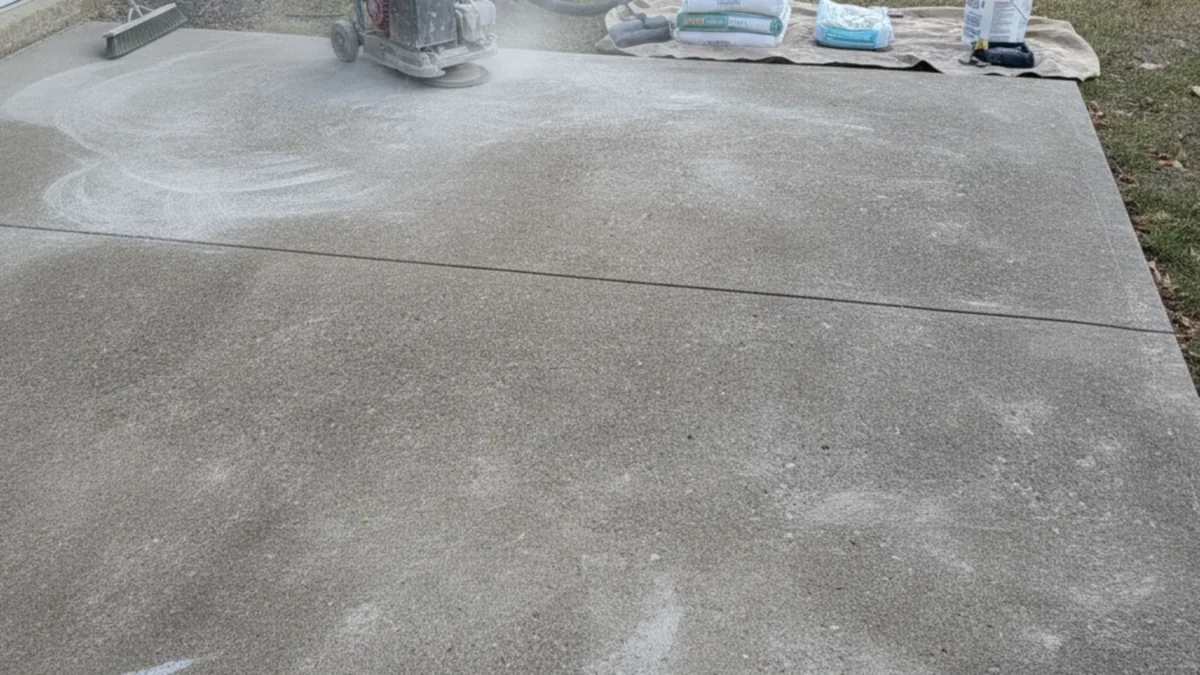
Concrete patio surface prepared for a resurfacing overlay

The existing slab carries the new surface

An overlay depends on the concrete below it. If the substrate moves, sheds material, holds contamination, or remains damp beyond system tolerance, the new layer can reflect those conditions. A clean-looking corner does not qualify the entire slab. Driveways, patios, walks, steps, and garage floors each have different loads, edges, moisture, and exposure that affect whether resurfacing belongs in the discussion.

Start by mapping cracks, joints, patches, spalls, hollow areas, low spots, and previous coatings. Note places where color changes after rain or snowmelt. Look at edges and transitions, not only the middle. The first fit check should identify disqualifying conditions before time is spent choosing decorative color or texture.
Good candidates and poor candidates

A more promising candidate is generally stable, properly supported, and strong beneath limited surface wear. Light scaling, widespread discoloration, minor pitting, or an outdated texture may be addressed after suitable preparation and repairs. Joints and stable cracks still need a plan, and some lines may remain visible or return through the overlay.

Poor candidates include slabs with vertical displacement, rocking panels, extensive deep spalling, active cracks, weak or powdery concrete, unresolved moisture, significant oil penetration, repeated patch failure, or slope that sends water the wrong way. Resurfacing does not lift panels or correct the base. When those conditions dominate, repair, leveling, drainage correction, or replacement may be more sensible.

Preparation creates the bond

Preparation may include removing coatings, sealer, weak surface paste, contaminants, and failed patches, then mechanically profiling the concrete for the selected overlay. Pressure washing alone is not the same as creating the required surface profile. Corners, edges, steps, cracks, joints, drains, and vertical faces need deliberate treatment. Dust and residue should not remain beneath an adhered layer.

Repairs must use compatible materials and geometry. Thin feathered edges may need special treatment or may not suit the system. Existing control joints should not be casually buried. The product manufacturer requirements for substrate, profile, moisture, thickness, mixing, temperature, and cure should govern the installation plan.

Texture, color, and drainage still matter

A resurfaced exterior area needs a finish suited to wet shoes, snow, furniture, cleaning, and ordinary traffic. More texture can support traction but may trap more debris. Darker colors can gain heat in direct sun and show salt residue differently. Decorative patterns add labor and make repairs or future touch-ups more visible. Choose appearance with the actual use in mind.

An overlay follows the underlying slope. It may refine small surface transitions within system limits, but it should not be expected to rebuild a badly pitched patio or deep drainage basin. Water should still move away from foundations and should not sit along edges. Any plan to change grade with overlay material needs careful thickness and product review, not guesswork.

Cracks, joints, and winter movement

South Bend freeze-thaw conditions make water management and substrate stability important. Existing cracks may reflect through an adhered surface, especially if they continue to move. Crack treatment can reduce defects or prepare the line, but it is not a promise that movement disappears. Joints are intentional separations and often need to remain part of the finished layout.

Snow tools, grit, deicing residue, shade, and repeated wetting can wear an exterior finish unevenly. Product choice and maintenance should match those conditions. Avoid treating resurfacing as a permanent shield. Observe wear, keep drainage paths open, clean with compatible methods, and assess future surface treatment based on actual condition.

Quote factors and alternative paths

Resurfacing is quoted from area, substrate preparation, coating removal, repairs, crack and joint treatment, overlay thickness, finish, color, texture, edges, steps, access, and cure protection. Small intricate areas can require more detail per square foot than an open rectangle.

If the slab is stable and surface wear is the main concern, a resurfacing quote may be useful. If damage is isolated, spot repair may be enough. If the surface is sound and the goal is moisture-management maintenance, sealing may be discussed. If settlement or deep failure controls the problem, leveling or replacement should be compared. Call Mike with the full condition so the proposed scope starts in the right branch.

What affects the quote

  • Preparation level: Paint or sealer removal, profiling, weak concrete, oil, old patches, dust control, and edge work often drive the scope.
  • Repairs and movement details: Cracks, joints, spalls, pits, steps, corners, vertical faces, and transitions require specific treatment.
  • Overlay design: Thickness, base and finish layers, texture, color, pattern, borders, and traction choices affect materials and labor.
  • Access and exposure: Tight yards, interior routes, weather, shade, drainage, cure protection, and return-to-use needs influence planning.

How the work is planned

  1. Qualify the substrate. Map cracks, joints, movement, weak areas, old coatings, contamination, moisture, slope, repairs, edges, and the intended use.
  2. Prepare to the system requirement. Remove incompatible layers and unsound material, complete qualified repairs, and create the mechanical profile required for bond.
  3. Apply the selected overlay. Mixing, thickness, edges, texture, color, decorative work, weather, and joint treatment follow the specified material system.
  4. Protect and maintain. Cure access, foot or vehicle use, cleaning, winter care, drainage observation, and future compatible treatments are explained for the surface.

Common questions

Can badly cracked concrete be resurfaced?

Active or displaced cracks can make resurfacing a poor fit because movement may carry through the new layer. Stable cracks may receive compatible treatment, but the slab condition, support, moisture, joints, and expected use all matter. Extensive fracture often points toward another option.

Will resurfacing fix a sunken concrete panel?

No. Resurfacing changes the top surface and does not restore support or lift a settled slab. Leveling may be considered for a supportable sunken panel. Replacement may fit when the panel is fractured, weak, badly sloped, or otherwise unsuitable for lifting.

Can you resurface concrete that was painted or sealed?

Possibly, but the old layer usually must be identified and removed to the degree required by the overlay system. Bonding to uncertain paint or sealer is risky. Mechanical preparation and a qualified concrete substrate are central to the fit decision.

Does resurfaced concrete need maintenance?

Yes. Cleaning, drainage, snow removal, deicing exposure, traffic, shade, and any compatible sealer or finish layer affect surface wear. Maintenance should follow the installed system and observed condition, not a claim that the overlay is permanent or maintenance-free.

What should I send for a resurfacing quote?

Send the address, surface type, rough dimensions, full-area and close photos, cracks, joints, patches, loose material, old paint or sealer, drainage, water history, use, and desired appearance. Call Mike at (574) 727-2611 or use the homepage form.

Call (574) 727-2611
Concrete Resurfacing South Bend, IN | Overlay Fit and Preparation