South Bend gets more snow than the rest of Indiana. Your driveway knows it. South Bend Concrete plans Michiana concrete that handles what Lake Michigan sends every winter.Call (574) 727-2611

Garage Floor Coating in South Bend, IN

A garage floor is a vehicle work area before it is a design feature. Tires arrive warm, winter slush pools along parking paths, grit acts like sandpaper, and jacks or rolling cabinets place concentrated loads. The right coating discussion starts with those habits, the condition of the slab, and how long the garage can be cleared. Color and flakes come later. Call Mike at (574) 727-2611 with garage dimensions, photos, parking use, drains, salt exposure, and any old coating.

Call directly
(574) 727-2611

Call (574) 727-2611 or use the homepage contact form. Include the address, photos if available, drainage concerns, and what is cracked, settling, or holding water.

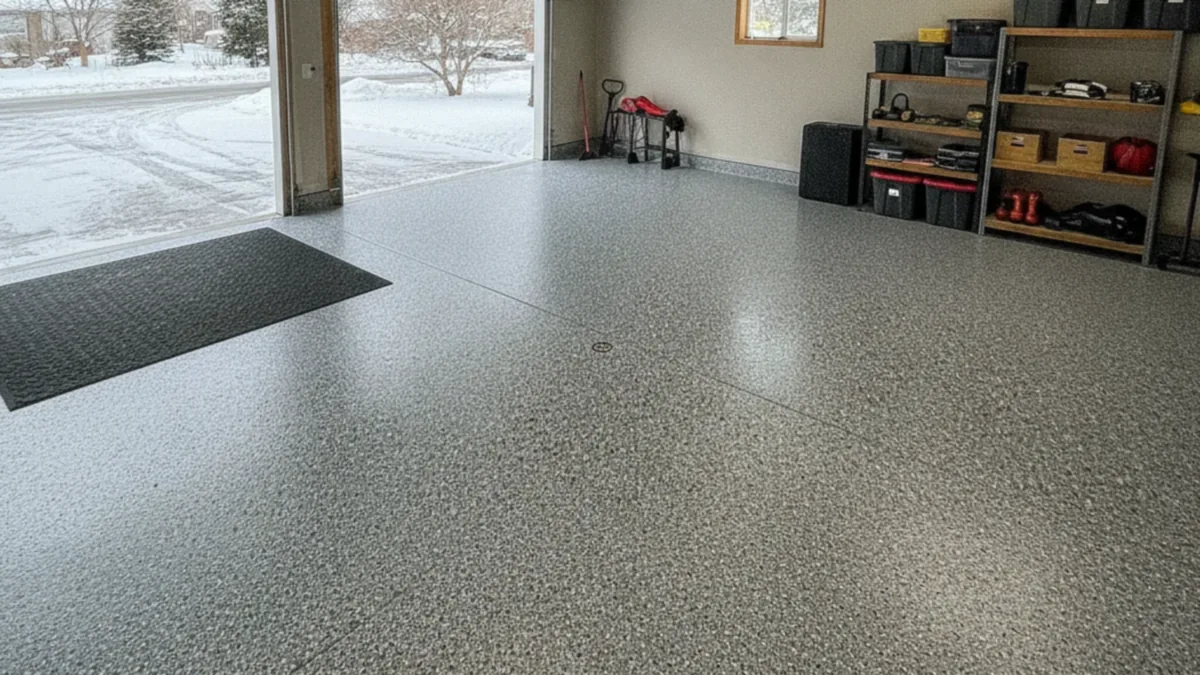
Clean coated garage floor with vehicle parking space

Start with vehicle use, not a polished sample

A daily parking garage has different priorities from a clean hobby bay. Note where tires stop, where snow drops from wheel wells, whether a snowblower or mower is stored inside, and whether you use floor jacks, stands, rolling toolboxes, motorcycles, or trailers. Mention oil drips, road salt, battery charging, lawn chemicals, and the cleaners you normally use. Those details help define preparation, texture, and the type of coating system worth considering.

Appearance still matters. A lighter floor can brighten the space, while a blended flake pattern can make dust and small marks less obvious. Yet the garage should not become difficult to sweep or uncomfortable to walk across in wet shoes. A high-gloss sample under perfect lighting does not show how the floor handles January slush or spring grit. Choose the look after setting practical priorities.

Salt slush and water need somewhere to go

South Bend vehicles carry deicing residue and wet snow into the garage. The melt pattern often forms under rocker panels, behind tires, and near the door. A coating may make the surface easier to wipe, but it does not change the slab pitch or create a drain. If water runs toward a wall, pools in a low spot, or crosses an interior threshold, that drainage condition should be documented before a coating is selected.

Look at the lower wall edges, control joints, drain surround, and garage-door line. Persistent moisture at cracks or white mineral deposits can point to movement or vapor conditions that deserve evaluation. Water entering through the door is a different problem from vapor moving through the slab. Neither should be reduced to a claim that a topcoat will waterproof the garage.

Hot tires, abrasion, and preparation

Tire paths are a demanding part of a garage floor. Heat, pressure, turning, and residue can stress a coating with poor adhesion. The answer begins below the color layer. Existing paint, sealer, oil, tire dressing, curing compounds, soft concrete, and dust must be handled through appropriate preparation. Mechanical profiling is often central because the new system needs qualified concrete rather than a smooth or contaminated surface.

Cracks, pits, spalls, and joints also need separate decisions. Small stable defects may be repaired with materials compatible with the coating plan. A crack showing vertical displacement or continued movement is not merely a cosmetic line. Control joints may remain visible or receive a specific treatment based on system and movement expectations. Hiding every line is not worth creating a false impression that the slab no longer moves.

Traction and cleaning pull in opposite directions

More texture can support traction when shoes and tires are wet. More texture can also hold dirt and make mopping slower. A very smooth finish may be easier to wipe but can feel slick with water, oil, or melted snow. The right balance depends on the household, garage slope, drainage, and whether the space is mainly for parking, hobbies, storage, or frequent mechanical work.

Discuss steps, entry-door routes, and the strip just inside the overhead door. These are common wet-foot areas. Decorative flake broadcast can affect both visual breakup and surface texture, but the result also depends on finish coats and additives. Ask how the proposed sample translates to the full system rather than judging one loose flake blend.

Downtime is part of the decision

A garage coating project requires the entire work area to be cleared before preparation. That includes shelves or equipment resting on the floor, stored tires, bikes, tools, freezers if they block access, and vehicles. The homeowner needs a safe temporary place for those items and another parking plan. Weather can affect outdoor storage, while neighborhood rules may affect overnight parking.

Preparation, layer timing, cure conditions, and vehicle return should follow the selected products and actual slab temperature. Walking on the floor is not the same as turning warm tires on it. Do not plan around a generic one-day promise. Ask for separate guidance for foot traffic, replacing storage, rolling equipment, and vehicle parking, then protect the floor until each stage is appropriate.

When garage coating is not the first fix

A coating is not the first answer for a slab with active water entry, severe spalling, widespread weak concrete, significant vertical crack movement, unstable patches, or drainage that sends meltwater into the house. Those conditions may require concrete repair, resurfacing assessment, drainage work, or slab replacement discussion. Coating over a bad base condition only changes the color of the problem.

A sound, qualified slab with manageable repairs and a clear parking-use plan can be a better candidate. Call Mike and explain where tires sit, where slush pools, what is on the floor now, and what downtime you can manage. That garage-specific information separates this decision from a general epoxy-flooring request for a basement or utility room.

What affects the quote

  • Garage size and edges: Square footage, stem walls, steps, posts, drains, door thresholds, and separate bays shape preparation and application time.
  • Current floor condition: Paint removal, oil contamination, pits, spalls, cracks, weak concrete, and uncertain old products can change the scope.
  • Coating build and finish: Primer, body layers, flake coverage, texture, color, and finish coats affect labor and material use.
  • Access and downtime needs: Clearing storage, weather-sensitive staging, temperature, ventilation, and cure protection are part of the quote process.

How the work is planned

  1. Map parking and wet zones. Identify tire positions, turning paths, slush pools, drains, door edges, entry routes, workbench areas, and where stored equipment sits.
  2. Qualify the slab. Review old coatings, oil, tire products, cracks, pits, joints, moisture signs, weak concrete, and drainage before choosing a system.
  3. Balance texture and cleanup. Select flake, color, gloss, and traction based on wet shoes, vehicle use, sweeping, mopping, tools, and household priorities.
  4. Plan an empty-garage window. Set storage, parking, preparation, layer, cure, foot-traffic, equipment-return, and vehicle-return timing around the specified products.

Common questions

Is garage floor coating the same thing as epoxy flooring?

Not always. Epoxy is one material family that may appear within a floor system. A garage coating should be selected around tire heat, salt slush, abrasion, cleaning, traction, and vehicle downtime. Basement or workshop epoxy decisions may put moisture, indoor conditions, or other use factors first.

Will a garage coating stop water from coming through the slab?

A coating should not be presented as a cure for active water entry or uncontrolled moisture vapor. First identify whether water comes under the door, through a crack, from plumbing, from wall seepage, or through the slab. Drainage or moisture correction may be needed before coating.

Can you coat over an old painted garage floor?

The old paint cannot simply be assumed to be a sound base. Its bond, contamination, and compatibility need evaluation. Mechanical removal is often needed so the new system bonds to prepared concrete rather than relying on paint that may already be weak or affected by tires and oil.

How long will my garage be unavailable?

That depends on preparation, repairs, number of layers, product chemistry, slab temperature, humidity, and the type of use returning. Foot traffic, shelving, rolling tools, and vehicle parking can have different times. The quote should state a product-specific sequence rather than a blanket promise.

What should I mention when calling about a garage floor?

Give the garage size, number of bays, vehicle use, tire paths, old paint or sealer, oil spots, cracks, pits, drains, water behavior, desired texture, and how long you can park elsewhere. Call Mike at (574) 727-2611 or use the homepage form.
Call (574) 727-2611
Garage Floor Coating South Bend, IN | Salt, Tires and Downtime